
Post-transplant GvHD symptom tracker

Graft-versus-host disease (GvHD) is a complication that can occur following an allogeneic stem cell transplantation. It occurs when donor immune cells (T cells) recognize the recipient's healthy tissues as foreign and attack them. Symptoms can range from mild to severe. GvHD commonly affects the skin, liver, and digestive tract but can also affect the lungs, eyes, mouth, hair, nails, joints, muscles, kidneys, and genitals.1,2
Careful monitoring after transplantation for any new or worsening symptoms is an important part of managing GvHD.
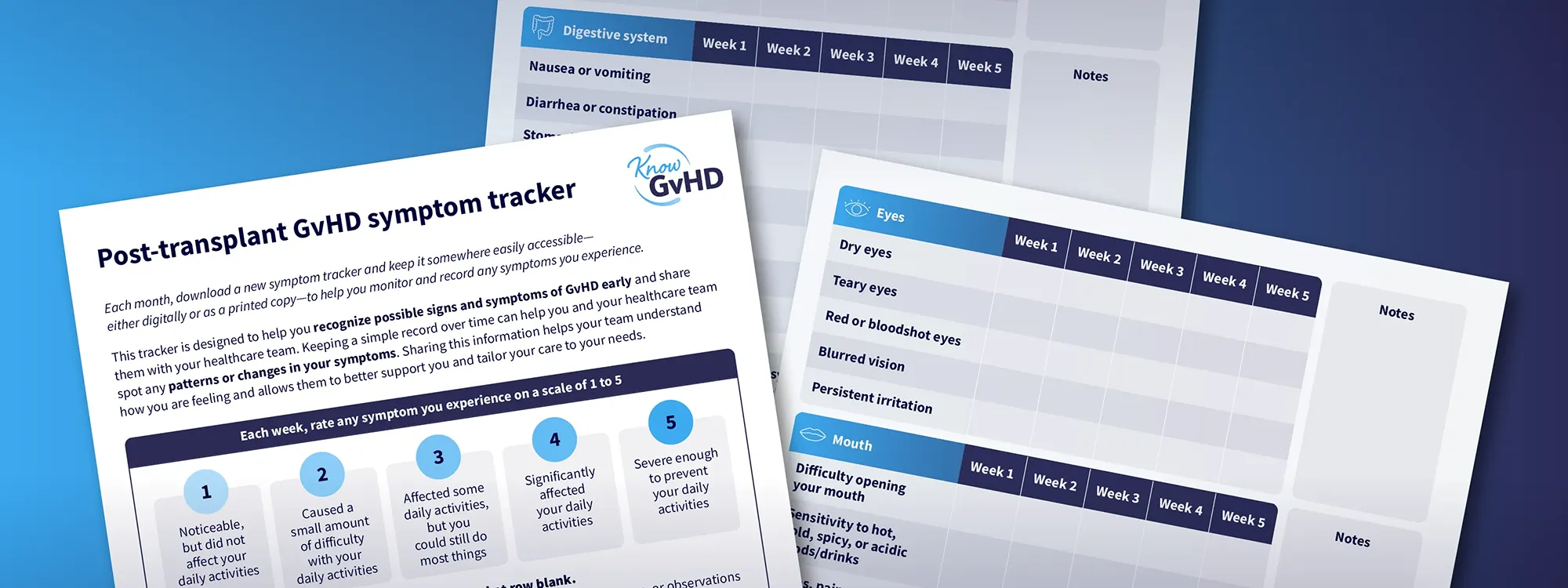
This tracker is designed to help you record and monitor signs and symptoms of GvHD and share them with your healthcare team. Recording your symptoms regularly can help you and your healthcare team identify any patterns or changes over time. Sharing this information can help your team understand how you are feeling and provide appropriate support and care based on your needs.
Each month, download a new symptom tracker and fill it out digitally on your computer, tablet, or phone, or print it out and complete by hand. Keep your completed monthly tracker somewhere accessible and take it with you to your appointments to help support conversations with your healthcare team.
Learn more about the risk of GvHD after allogeneic stem cell transplantation in our expert interview with Mohamad Mohty.
This symptom tracker is designed to help you record and communicate your symptoms. It does not diagnose GvHD or replace advice from your healthcare team. If you experience any new or worsening symptoms, it is recommended that you contact your healthcare team.
References
- Justiz Vaillant AA, Modi P, Mohammadi O. Graft-versus-host disease. In: StatPearls. StatPearls Publishing; 2024. http://www.ncbi.nlm.nih.gov/books/NBK538235. Accessed Sep 4, 2026.
- National Comprehensive Cancer Network. Graft-versus-host disease NCCN guidelines for patients. http://www.nccn.org/patients/guidelines/content/PDF/GVDH-patient-guideline.pdf. Accessed Sep 4, 2026.